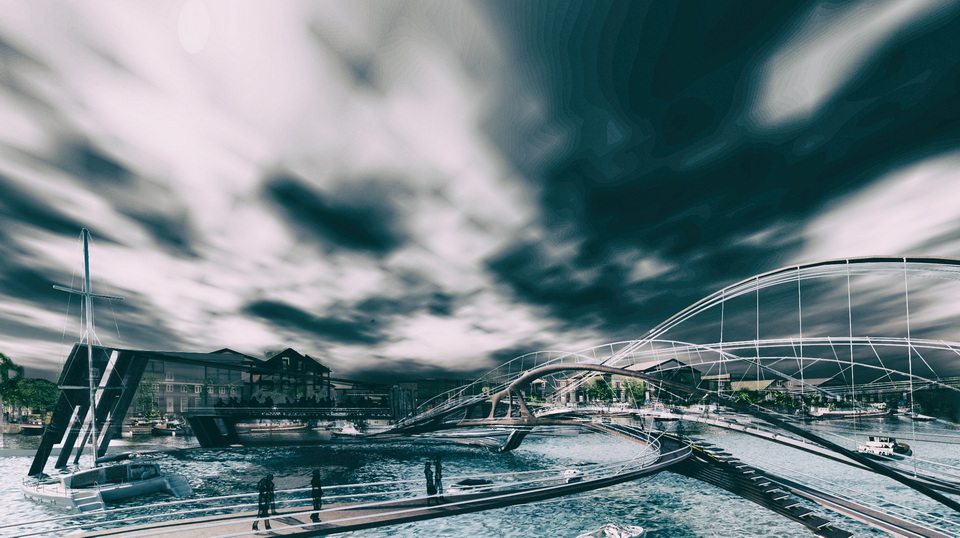
Architectural project · 2011
Amsterdam Iconic Pedestrian Bridge
“This is what happens when the image becomes time-image… The screen itself is the cerebral membrane where immediate confrontations occur between the past and the future, the inside and the outside, at a distance impossible to determine, independent of any fixed point. The image no longer has space and movement as its primary characteristics but topology and time.” — Deleuze

Introduction#
A bridge spans a physical obstacle to establish passage. Designed primarily for pedestrians and cyclists, it can also connect landscapes, frame views, and become a civic object in its own right. The most successful footbridges reconcile utility, public experience, and sculptural presence.
Overview#
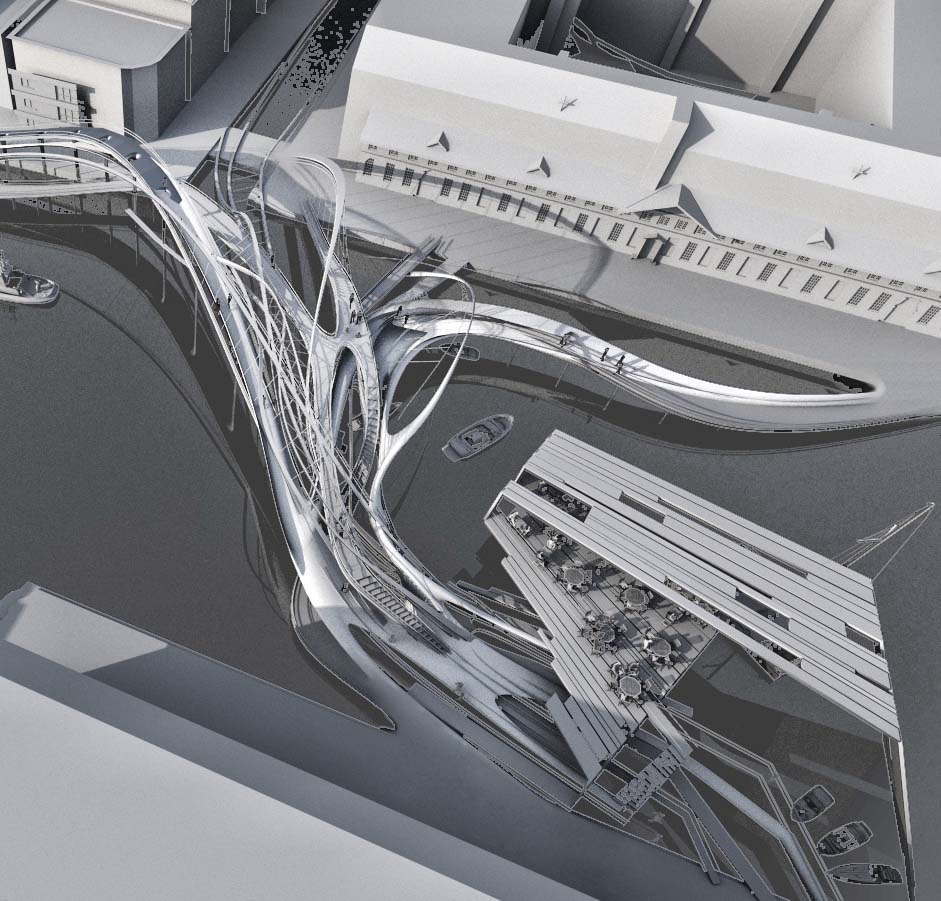
This international competition called for an iconic pedestrian bridge in central Amsterdam. The proposal was expected to express a contemporary architectural language while responding carefully to its historic urban setting.
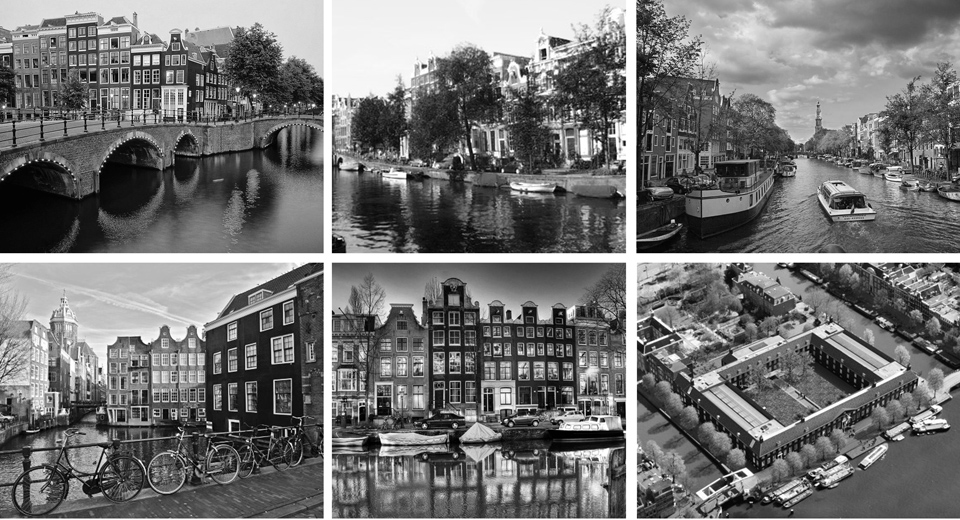
The bridge was conceived as a new urban symbol and gateway to the Hermitage Amsterdam Museum. The competition sought proposals that would:
- Advance design excellence across architecture and engineering.
- Investigate the distinctive challenges of an original footbridge.
- Explore the bridge as both infrastructure and public art.
- Integrate sustainable design principles throughout the proposal.
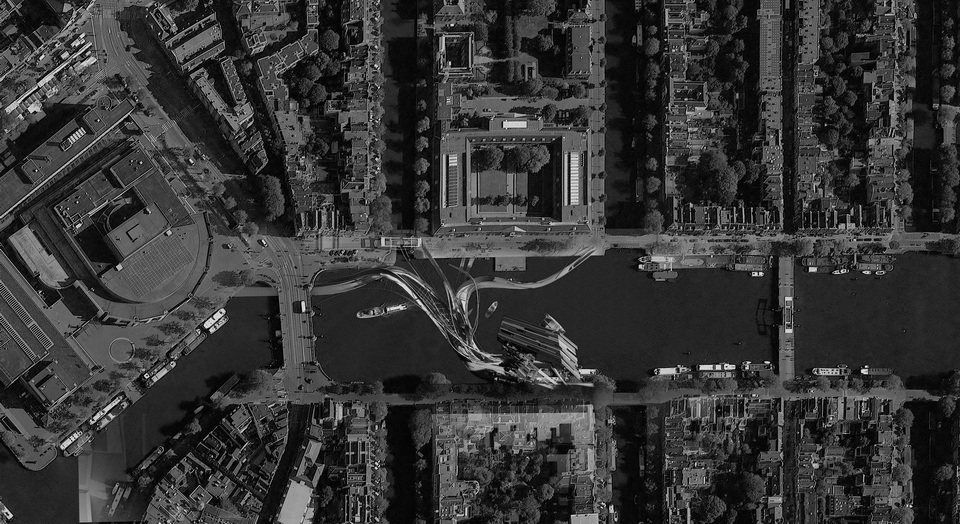
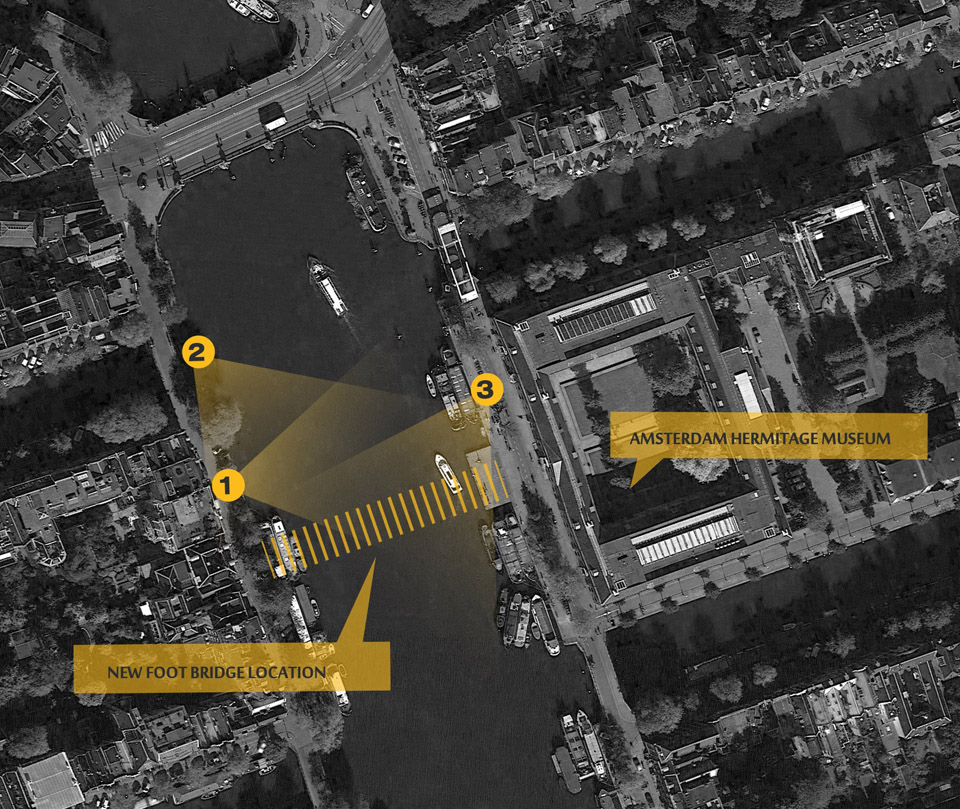
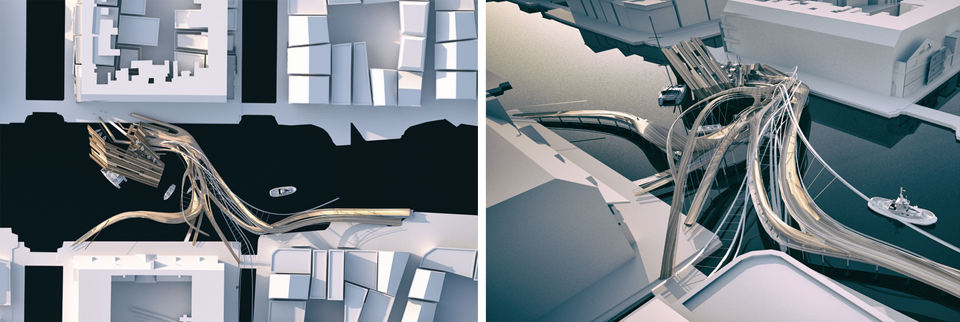
The 90 m bridge is located opposite the Hermitage Amsterdam Museum at Amstel 51, linking the east and west banks of the Amstel. It serves residents, visitors, and the surrounding neighborhood while creating a direct approach to the museum.
Design Requirements#
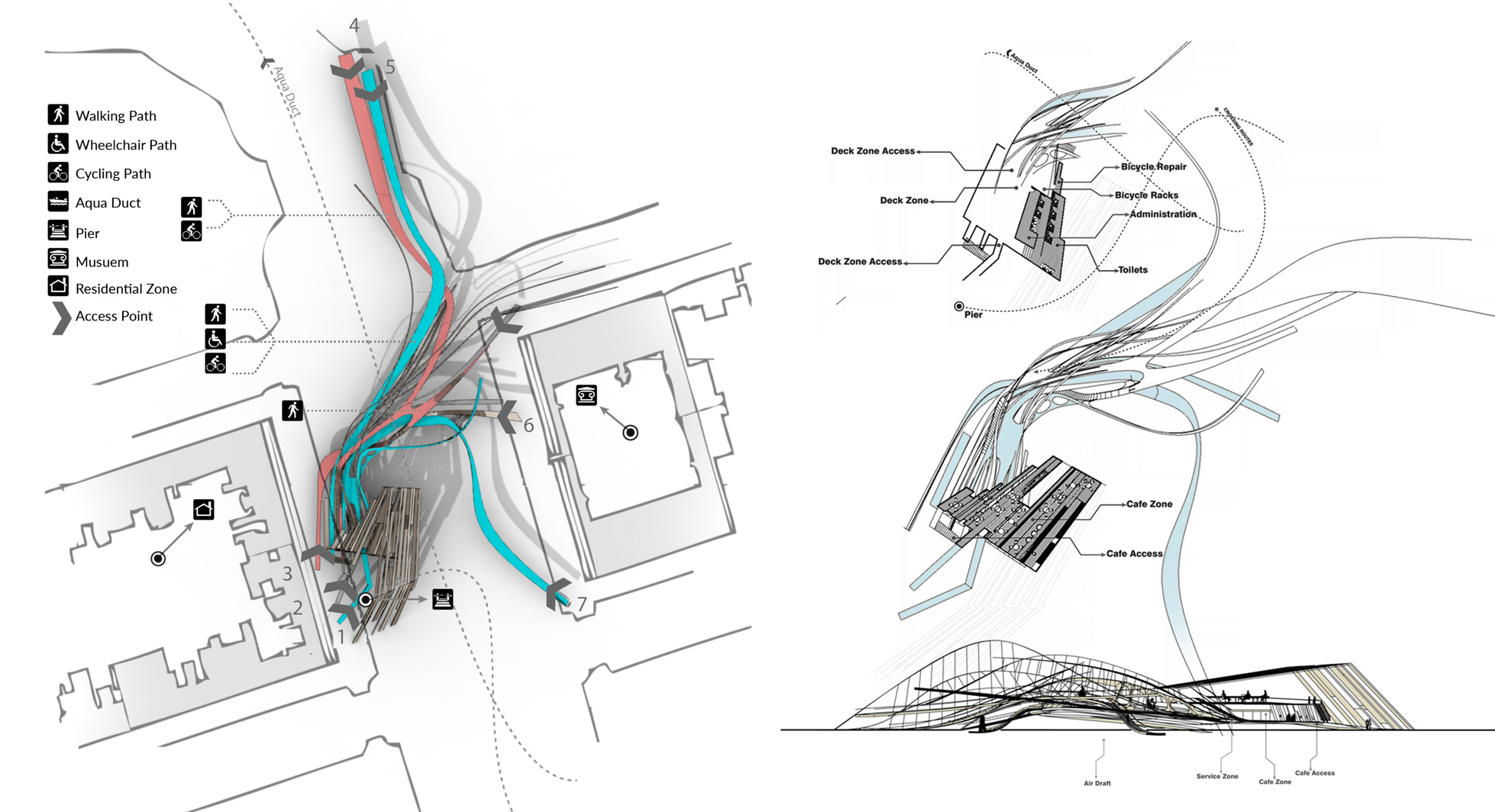
The existing boat berths along both riverbanks are omitted, leaving the site clear. The program includes a pedestrian bridge at least 90 m long and 4 m wide, aligned with the Hermitage Amsterdam Museum.
-
Administration#
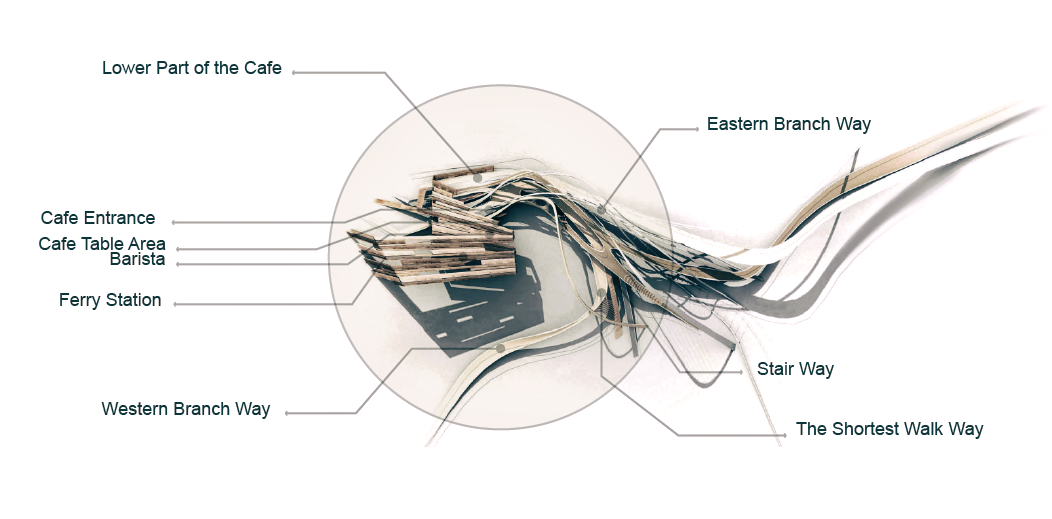
A 30 m² office, changing, plant, and storage area, together with 30 bicycle racks.
-
Café#
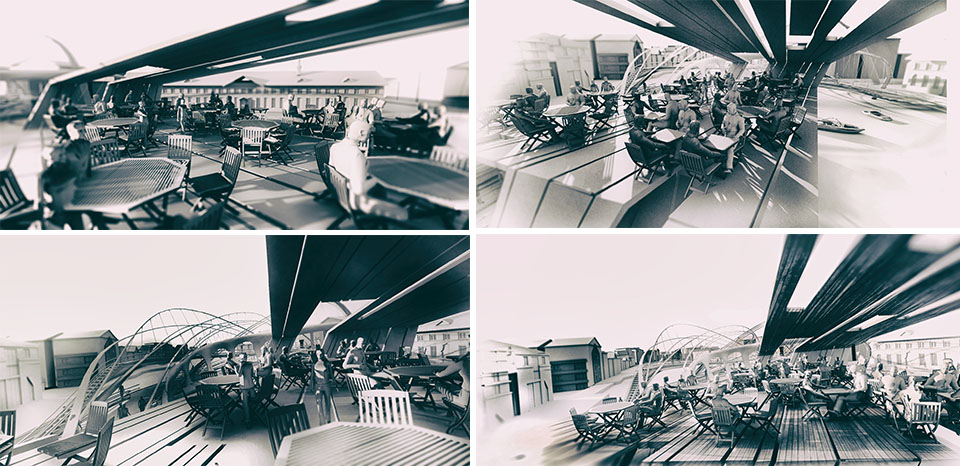
A 100 m² café with 20 four-person tables and a small food concession, plus a 50 m² bicycle-repair facility with two workstations, tools, and bicycle storage.
-
Services & Facilities#
A 20 m² staff and café-customer toilet facility with four cubicles.
-
Total Area#
Approximately 200 m², excluding the bridge deck.
-
Design Criteria#
Access: comply with accessible-design standards.
Structure: propose an architecturally legible structural system, clearly expressed in plans and sections.
Spatial organization: the café, bicycle-repair area, and services may occupy the bridge or either riverbank. Clearance below the bridge must satisfy international river-transport requirements.
-
Volume#
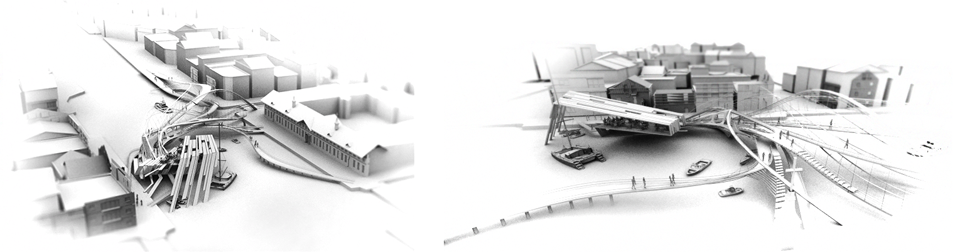
The proposal must relate harmoniously to its context while remaining distinctive and original.
-
Materials#
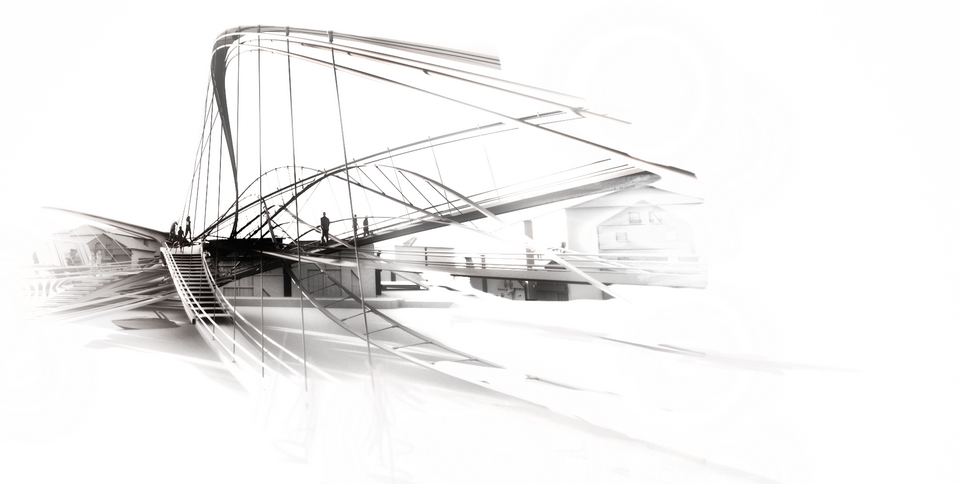
Material selection is unrestricted, provided that sustainability informs the decision.
-
Goals#
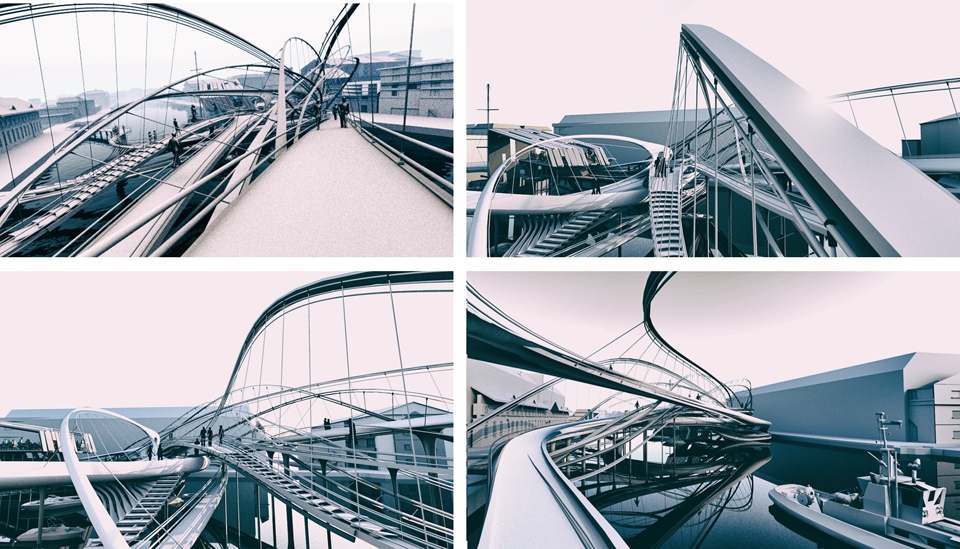
The bridge follows a spiraling movement through the social fabric. At its turning point, past and present converge, the museum comes into view, and a rotation of approximately 20 degrees frames the principal vista.
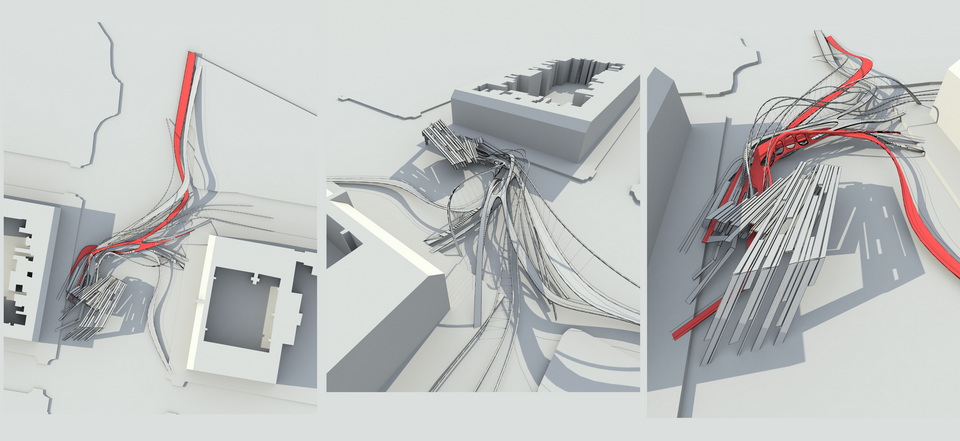
Manifesto & Idea#
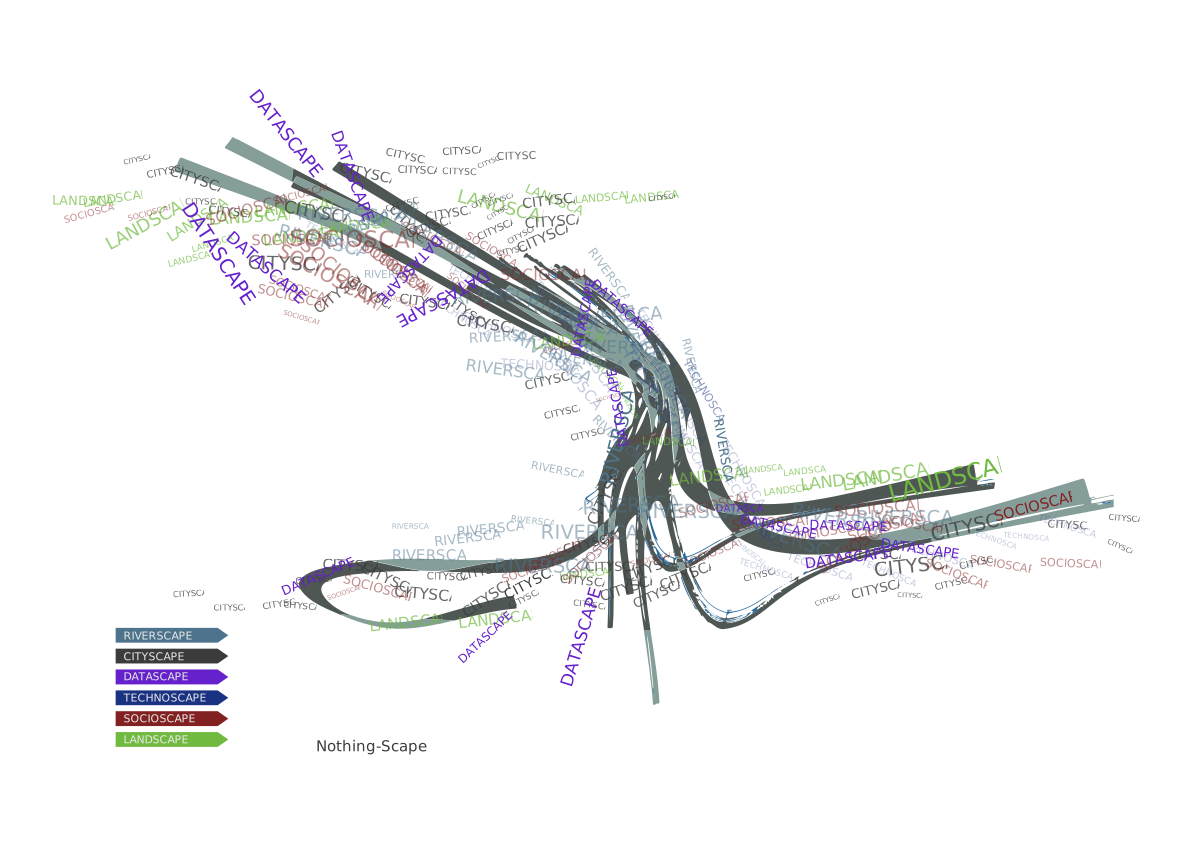
NothingScape: Topology of Uncertainty#
- NothingScape is an active field for social exchange, not an empty or negative condition. It brings the forces of the site into productive uncertainty, preventing any single force from prescribing behavior.
- It is shaped by air movement, the pull of the museum, the river, and patterns of passage, while opening onto multiple overlapping scapes—urban, landscape, river, social, and technological.
- Together, these scapes form a social fabric. Architecture anticipates their complexity while preserving room for individual freedom.
- NothingScape does not ignore context; it resists allowing any one contextual force to dominate the space.
- Architecture becomes the medium through which a collective journey unfolds.
- A bridge best embodies this condition: it counters fixed polarities, dissolves divisions, and connects across the gap.
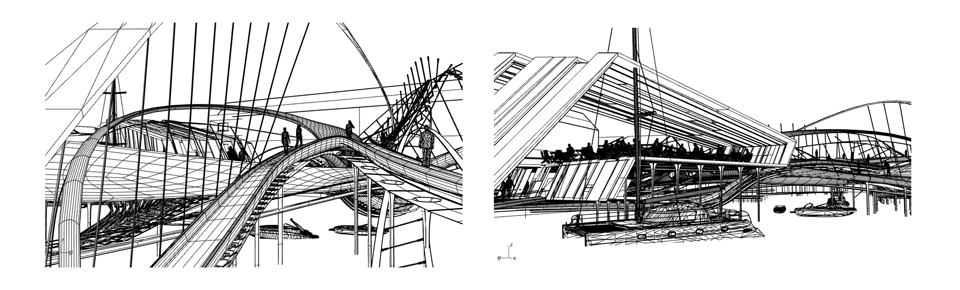
The spiral movement folds social memory into the present before opening outward. At the point of rotation, the museum is revealed and the view reaches its fullest expression.
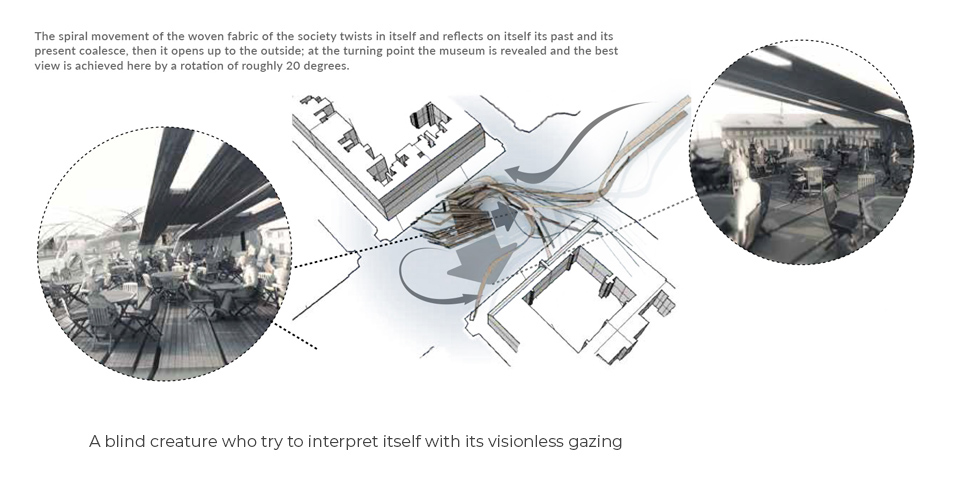
“Here immediate and direct confrontations take place between the past and the future, the inside and the outside, at a distance impossible to determine, independent of any fixed point. The image no longer has space and movement as its primary characteristics but topology and time.” — Deleuze