Architectural project · 2009
The Contemporary Art Museum of Taipei City
Introduction#
Digital tools have made the transformation and circulation of images part of everyday culture. While artistic appropriation has a long history—from Picasso to Duchamp’s altered Mona Lisa—contemporary image-making expands that practice into a popular, participatory medium.
These interventions may appear humorous or superficial, yet they also function as a form of public critique. They move quickly through media networks, reshape familiar images, and invite broader audiences to engage with art.
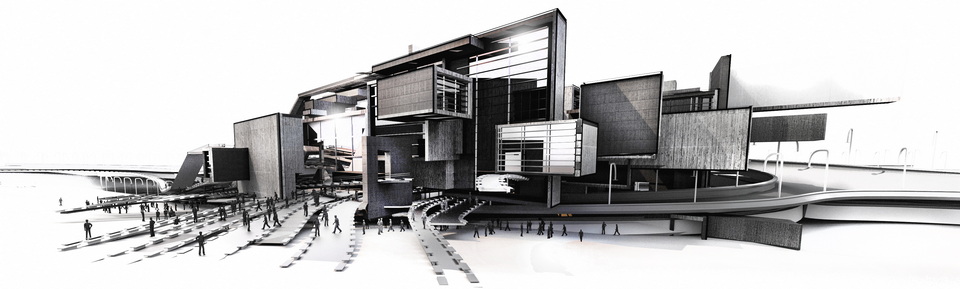
Design Concept & Manifesto#
The Mechanical Reproduction of Space#
Walter Benjamin’s writing on mechanical reproduction described a shift in the public relationship to art through the dissolution of the artwork’s aura. Art was released from traditional social hierarchies and brought into everyday life. This project extends that shift into architecture, treating the museum as an accessible, active setting where art, culture, and public enjoyment intersect.
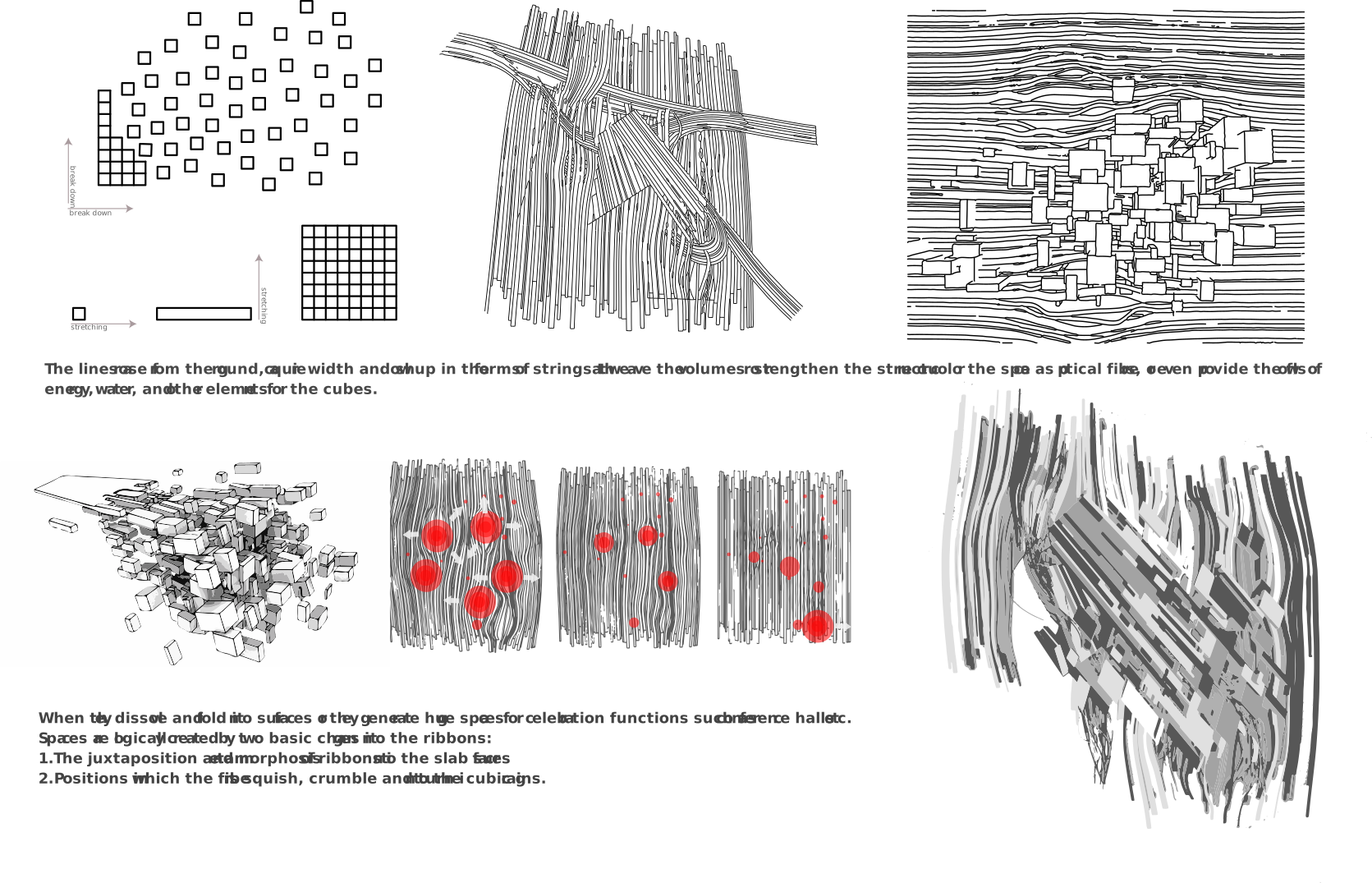
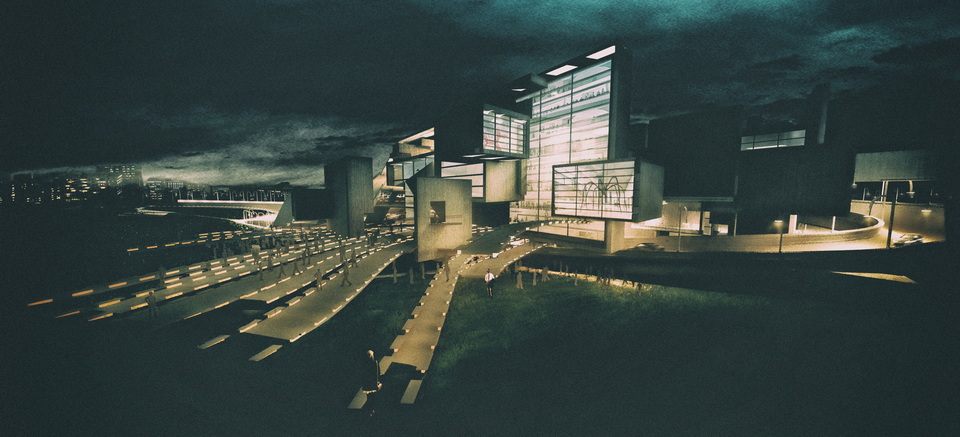
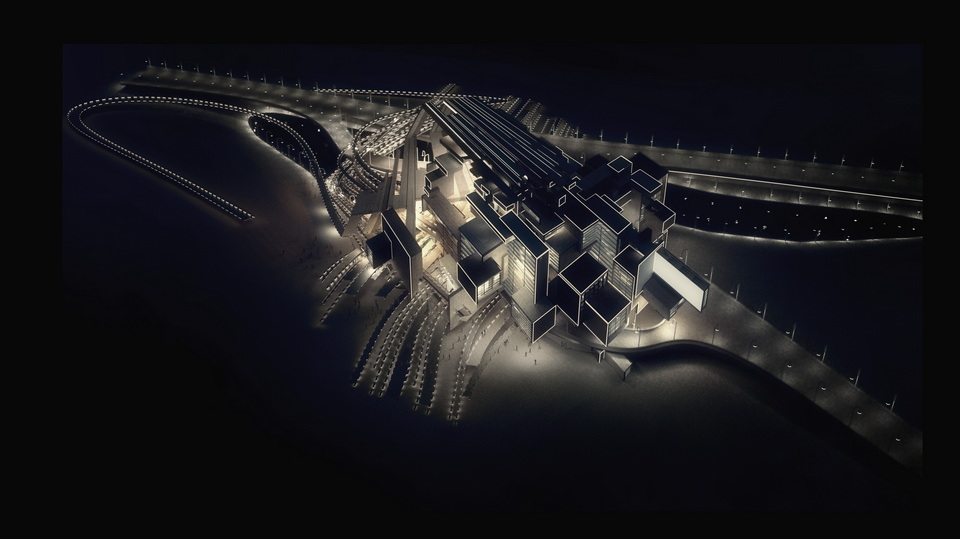
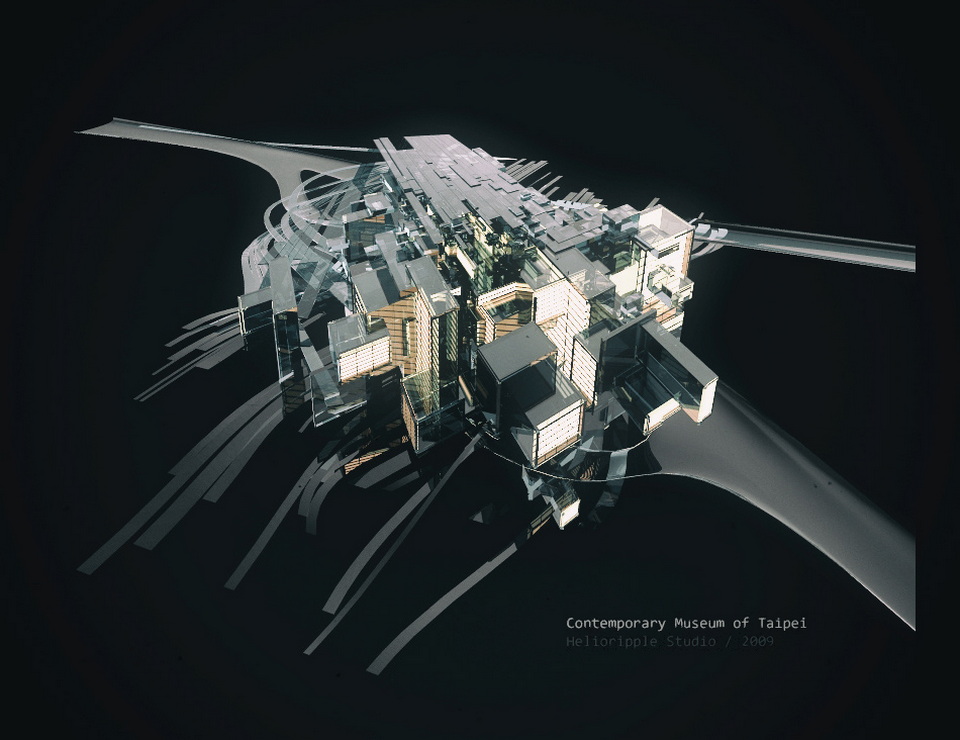
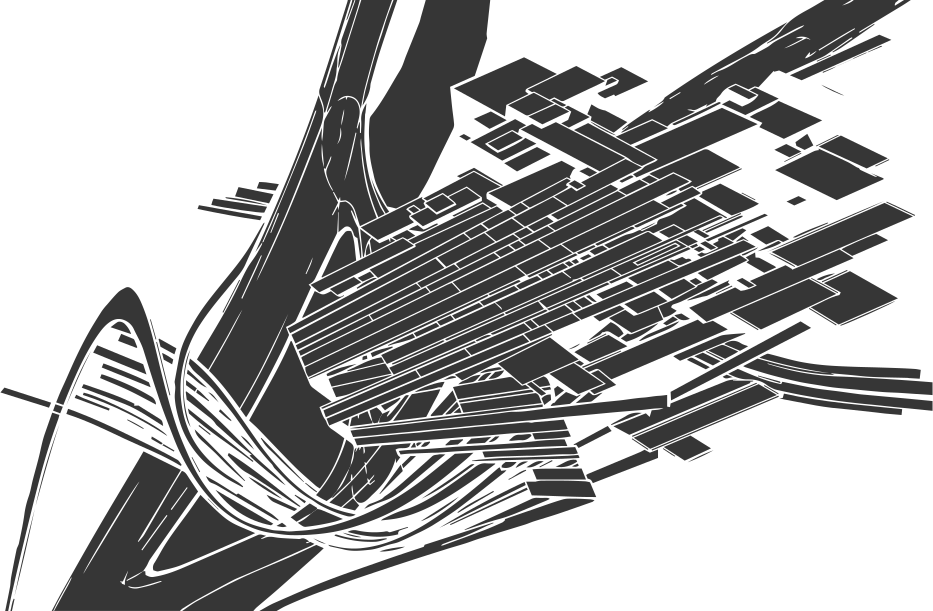
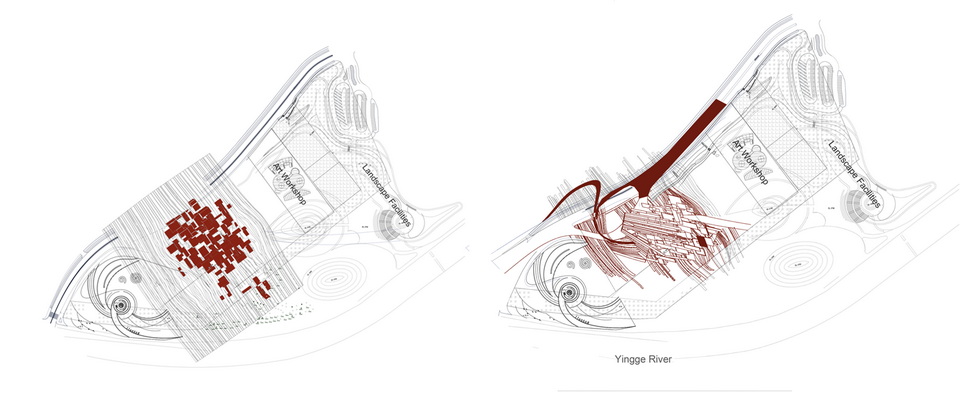
Rather than following the conventional hierarchy of point, line, surface, and volume, the proposal develops a looping system of grains that allows these categories to transform into one another.
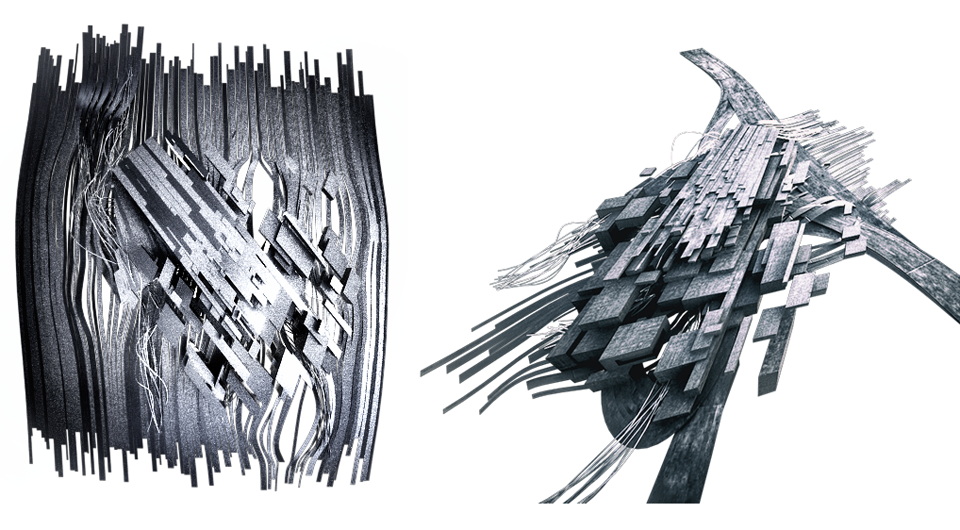
The grain operates at multiple scales, functioning both as point and mass. Lines fold into volumes, dissolve into surfaces, and break down into cubic elements, eliminating a fixed hierarchy between circulation, structure, and enclosure.
Lines rise from the ground and acquire width as strands. They weave volumes, reinforce structure, color the space as optical fibers, and distribute energy, water, and other services. As they merge and fold, they form surfaces and large collective spaces such as conference halls. Two primary transformations govern the system:
- The juxtaposition and metamorphosis of ribbons into slab-like surfaces.
- The compression and fragmentation of fibers into cubic grains.
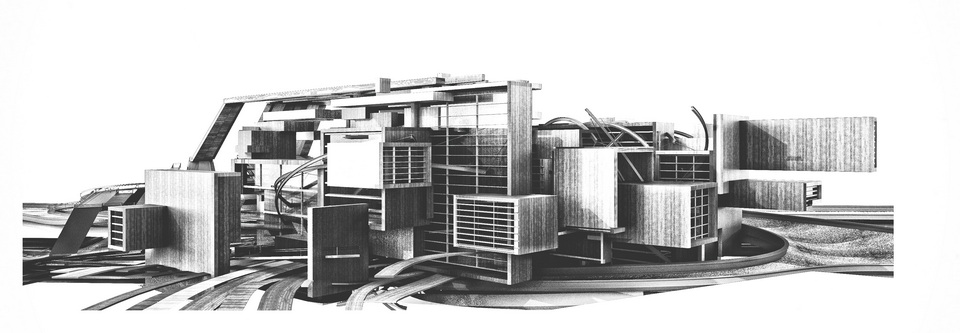
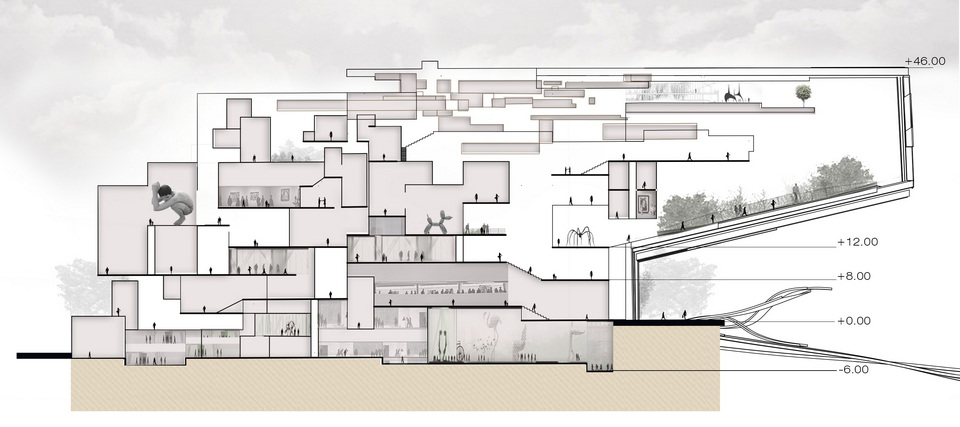
Falling masses create semi-cubic spaces for different programs. When these masses dissolve into surfaces, they produce granular fields; when they gather, they form large ceremonial spaces. They can also become chains of retail or gallery corridors that fold back into linear circulation.
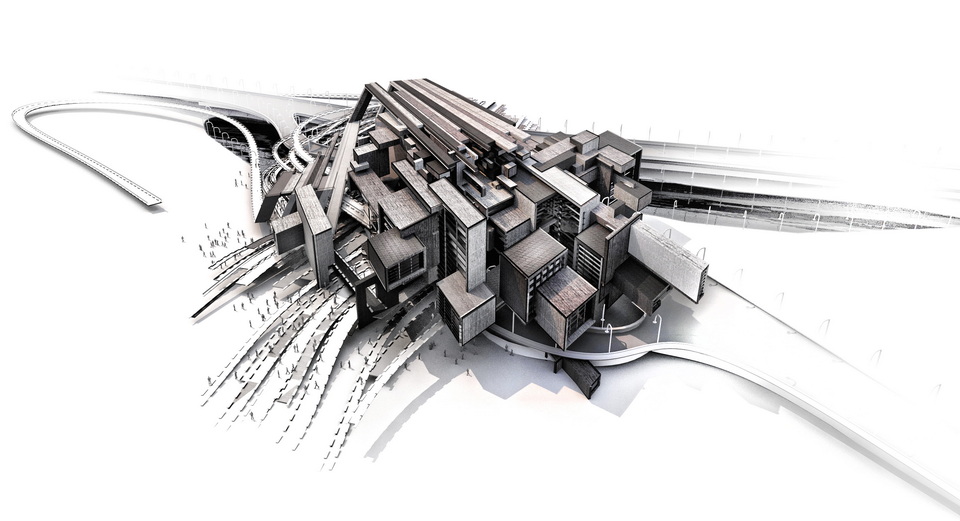
Selected cubes can change function or material in response to immediate spatial needs, periodically altering the museum’s appearance. Surfaces emerge from the collective effects of grains and strands, while remaining independently legible.
These transformable elements provide enclosure, structure, projection surfaces, and transitional spaces. Their intermediate states—between line, strand, surface, and grain—create roadways and pedestrian routes in which practical circulation becomes part of the museum experience.
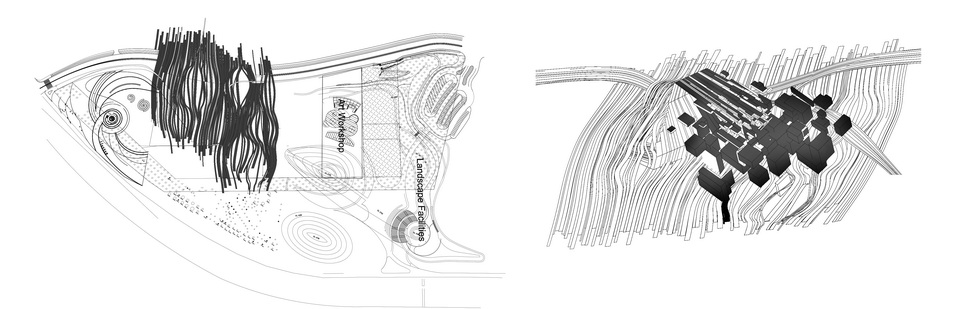
At key points, strands and grains cut through the project to create energetic access routes and intersections between traffic and museum spaces. The museum allows the road to enter the building, enabling visitors to experience the collection from their vehicles and introducing a temporal dimension to the gallery sequence.
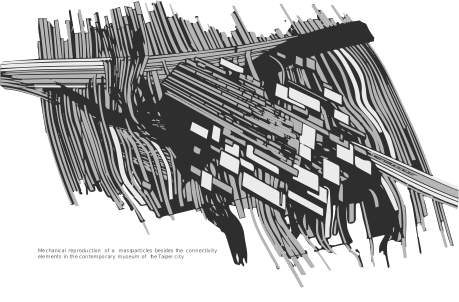
Features & Specifications#
The New Taipei Museum of Art is conceived as a place for exhibition, education, promotion, and collection. Its three core missions are:
- Preserve and interpret the work of New Taipei artists.
- Recognize excellence among Taipei artists.
- Promote New Taipei art.
Site Position#
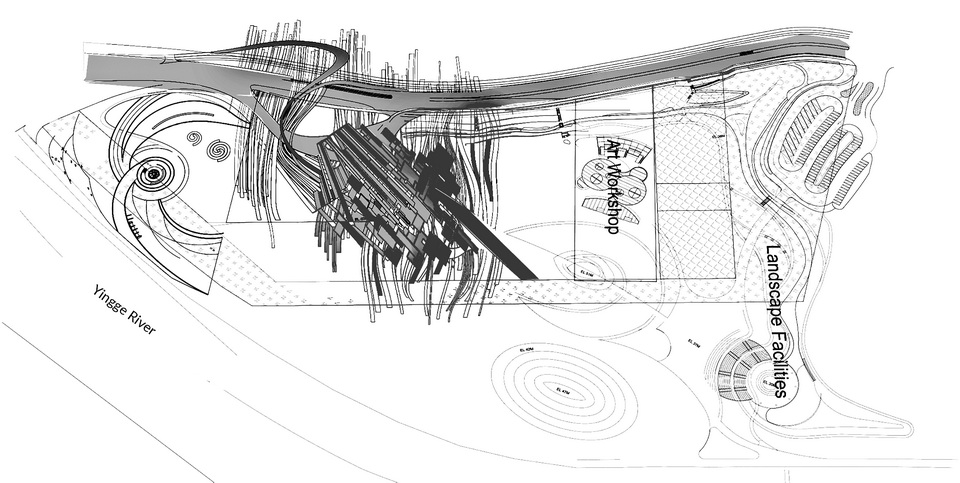
The New Taipei Museum of Art site includes a 25,000 m² museum parcel at Zhongzheng 25-9, Yingge District, New Taipei City, plus a further 19,000 m² for landscape, for a total site area of approximately 44,000 m².
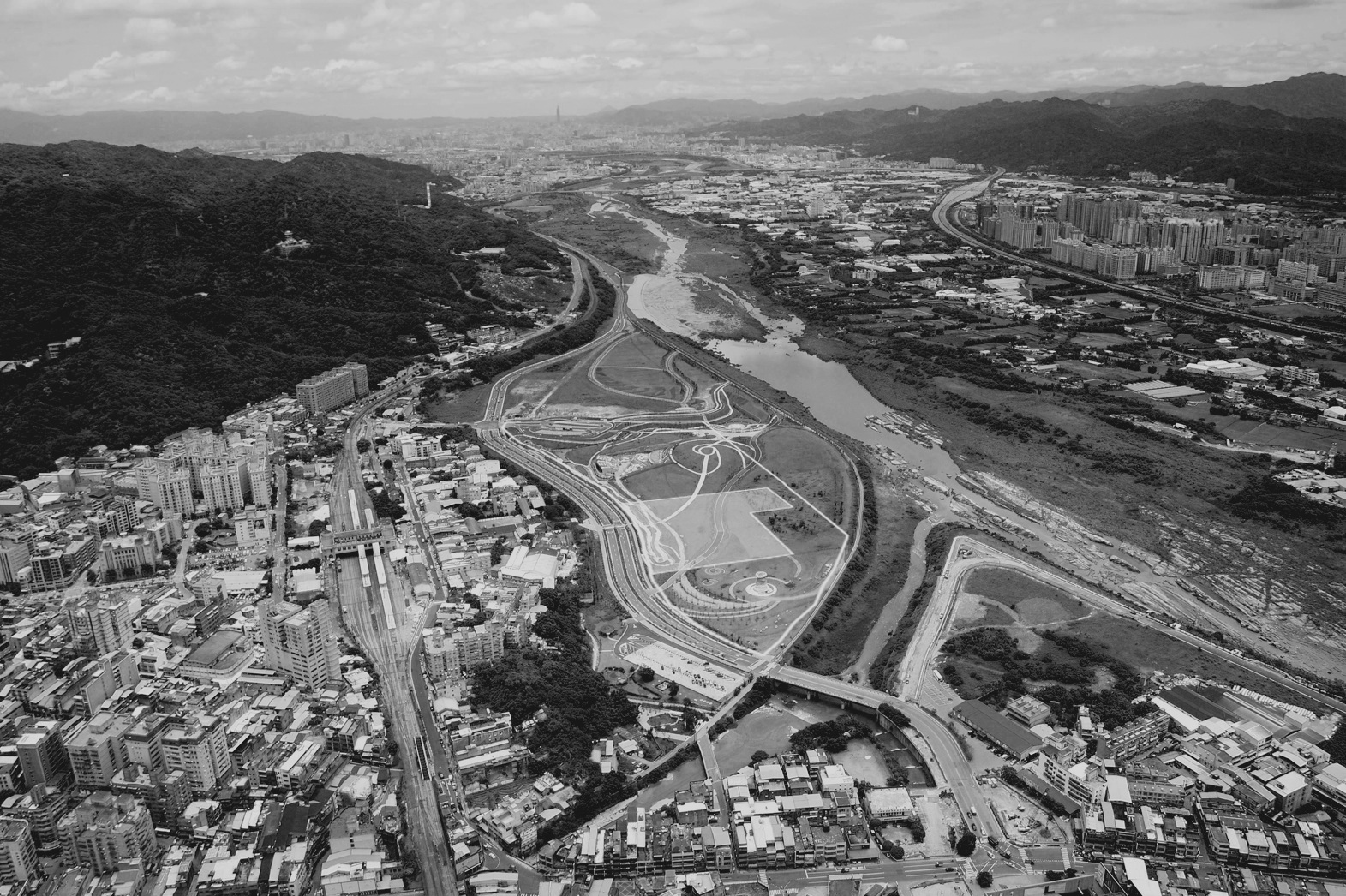
Project Details#
- Location: Taipei, Taiwan
- Type: Cultural – Public
- Design Team: Jason Zerafa, Joaquin Boldrini, Bridgett Cruz
- Associate Architect: Gregory T. Waugh, AIA
- Structural Engineer: Gilsanz Murray Steficek LLP
- Client: New Taipei City Government
- Facility: Art Museum
- Size: 53,000 m²
- Status: International competition proposal
Design Challenge#
The New Taipei City Government and local civil organizations have prioritized cultural infrastructure that preserves and extends the region’s artistic resources. Since 2008, plans for the museum have sought to integrate art and humanistic resources, strengthen cultural networks, connect tourism assets, and increase the city’s cultural vitality.
Pond Function#
The flood-detention pond is retained and expanded to meet seasonal drainage requirements. A network of strands directs and filters rainwater into the pond, turning essential infrastructure into a prominent landscape feature.
The first level accommodates the children’s zone, support functions, and part of the art program.
Public Attitudes Toward the Object#
When Duchamp placed a readymade object in a museum, he transformed the public’s relationship to it. The artist did not manufacture the object; the act of selection and placement altered its meaning.
Within the museum’s frame, an ordinary object becomes art because visitors encounter it differently. The project treats this shift in perception as a central quality of museum space.